How to Choose the Right AI Model for Your Text Tasks
Choosing a text model is not about picking the biggest one. It is about matching the model to your use case, latency, and cost constraints.
Start with your use case first. Are you building a chatbot, a document analysis pipeline, a code assistant, or a simple summarizer. Different models are optimized for different kinds of tasks such as reasoning, multilingual understanding, or fast responses.
Next think about latency and scale. If your app needs real time responses for many users, you should lean toward smaller or quantized models. Larger models may give slightly better answers but they will cost more and respond slower.

Then consider context length. If you are working with long documents or retrieval augmented generation systems, you need models that support large context windows.
Finally consider hardware and cost. Some models run easily on a single GPU while others require multi GPU setups. Efficient architectures such as mixture of experts models can give strong performance while keeping compute manageable.
When you align these four things, use case, latency, context, and cost, the right model becomes obvious.
Popular open source text models and when to use them
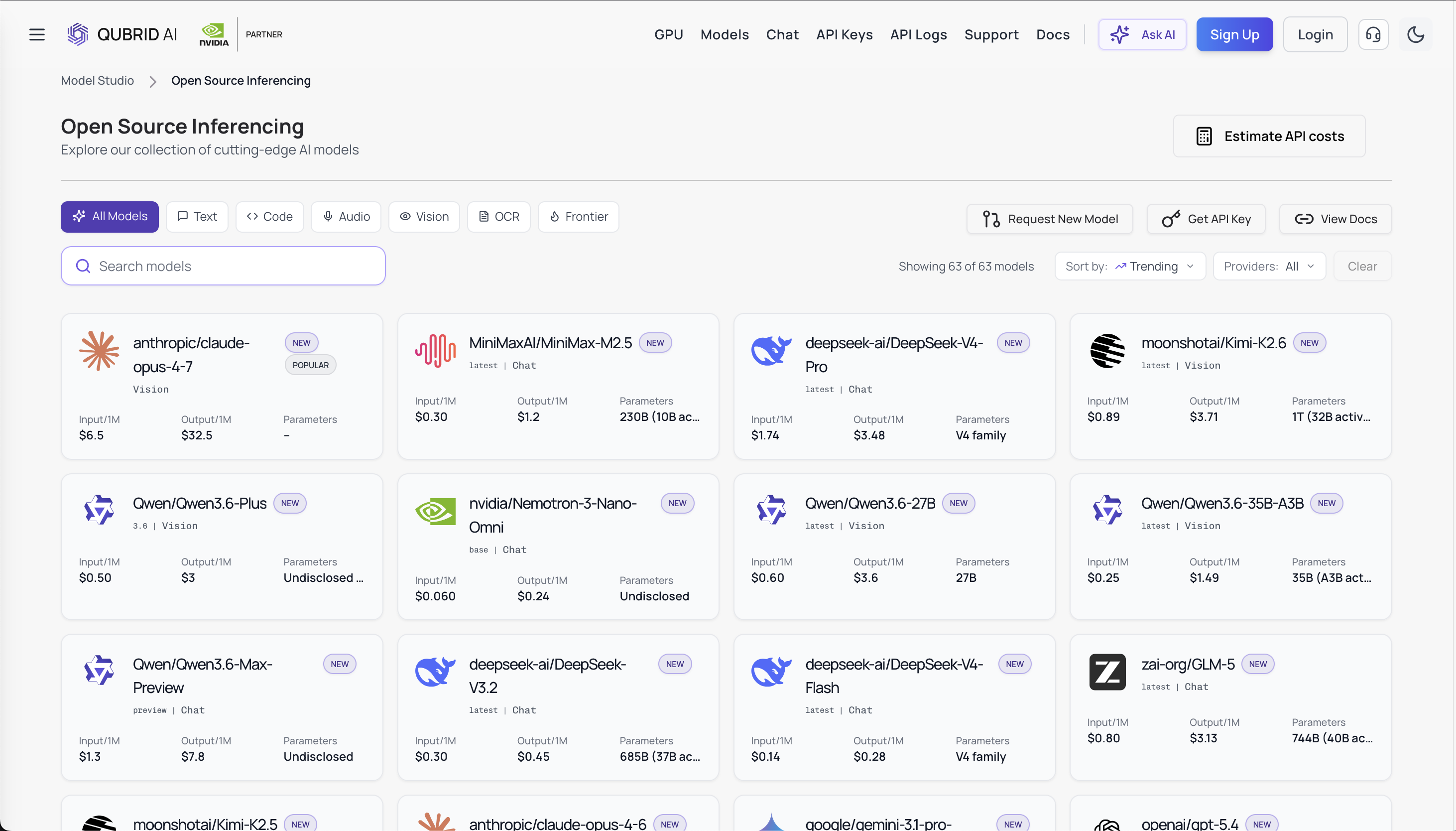
Here are the most widely used open models today that you will typically find on platforms like Qubrid AI or similar GPU inference platforms.
LLaMA family
The LLaMA family from Meta is one of the most widely used open weight model families and is known for strong performance across text generation, reasoning, and coding tasks.
Use LLaMA when you need a reliable general purpose model for chat, content generation, or reasoning heavy workflows. Smaller versions like 8B are good for fast inference, while larger versions like 70B or above are better for higher quality outputs. Best use cases include chatbots, writing assistants, and RAG pipelines.
Mistral and Mixtral
Mistral models are known for their efficiency and strong multilingual performance. Mixtral uses a mixture of experts architecture which activates only part of the model at runtime, making it efficient while still powerful.
Use Mistral 7B for fast and lightweight inference. Use Mixtral when you want stronger reasoning and multilingual capabilities but still want efficiency. Best use cases include customer support bots, translation systems, and scalable production chat systems.
Gemma models
Gemma models from Google are lightweight but high quality open models that support both text and multimodal use cases.
Use Gemma when you want smaller models that still deliver strong performance and are easy to deploy. Best use cases include summarization, classification, and lightweight assistants.
Qwen models
Qwen models are strong multilingual models with good reasoning and chatbot performance. They are widely used for conversational AI and multilingual systems.
Use Qwen if your product targets multiple languages or requires cross lingual understanding. Best use cases include global chatbots, translation tools, and multilingual document processing.
Phi models
Microsoft’s Phi models are designed to be small but highly capable. Some versions are small enough to run on edge devices or even phones while still delivering strong reasoning performance.
Use Phi when you need low latency and low compute requirements. Best use cases include on device assistants, lightweight copilots, and embedded AI features.
DeepSeek models
DeepSeek models are gaining traction for strong reasoning and coding performance, and are often compared with top tier models while remaining open.
Use DeepSeek for coding, logic heavy tasks, or agent workflows. Best use cases include developer copilots, autonomous agents, and structured reasoning tasks.
Codestral and coding focused models
Models like Codestral from Mistral are specifically optimized for code generation across many programming languages. Use these when your core use case is writing, debugging, or explaining code.
How teams typically choose in practice
Most teams follow a simple pattern. They start with a strong general model like LLaMA or Mistral for prototyping. Then they test smaller variants or distilled versions to reduce cost. If they need multilingual capability they move toward Qwen. If they need on device or low latency systems they use Phi.
In many production stacks, teams run multiple models together. A smaller model handles simple queries and a larger one handles complex reasoning.
Where Qubrid AI fits in?
Once you choose your model, the next challenge is actually running it at scale.
This is where Qubrid AI becomes useful. Instead of managing GPUs and deployment pipelines yourself, you can run open source models on demand, test different sizes, and deploy optimized versions such as quantized or distilled models.
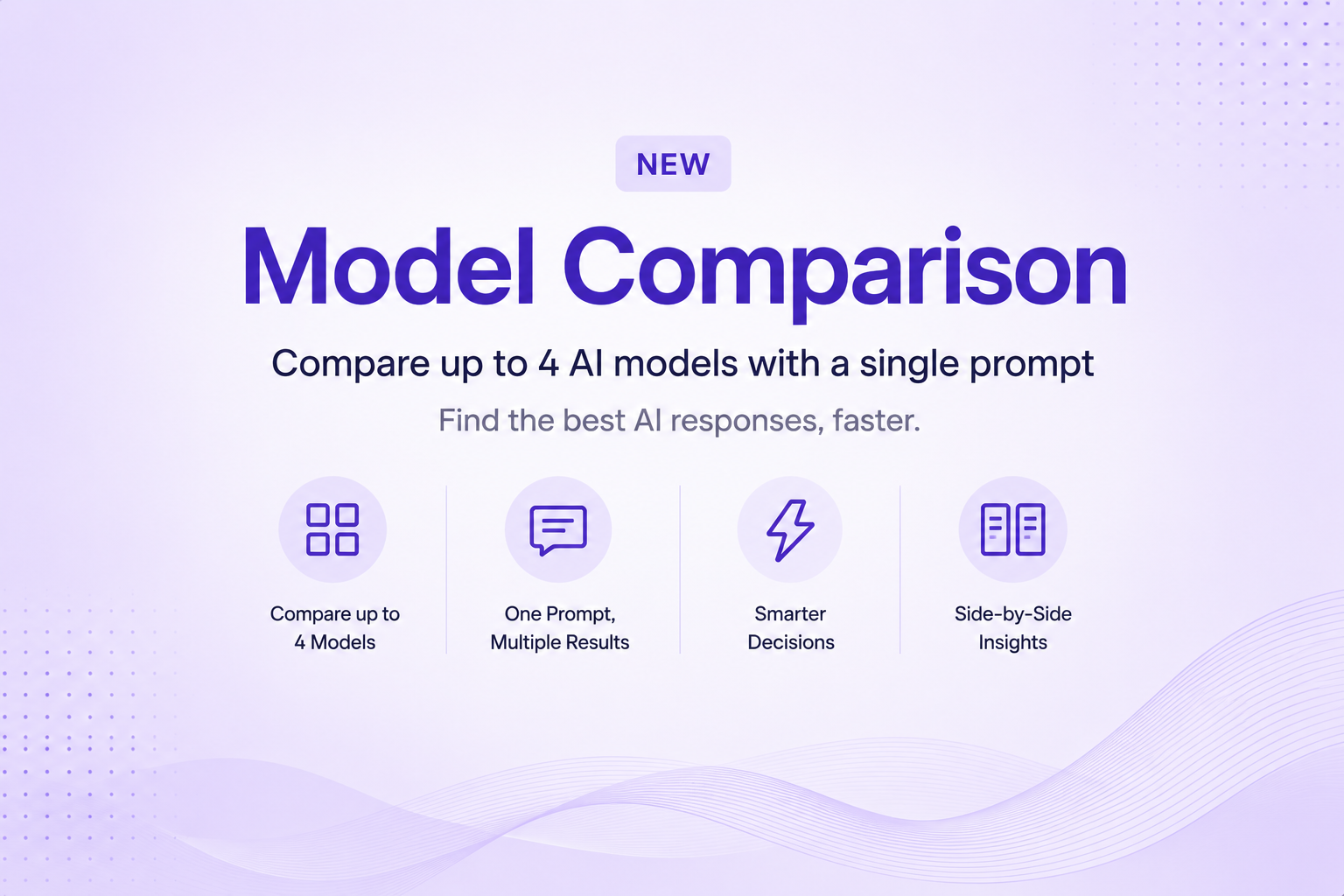
That means you can experiment with LLaMA, Mistral, Qwen, Phi, and others, compare performance and cost, and scale your inference workloads without worrying about infrastructure.
If you are building text applications today, the real advantage is not just choosing the right model. It is being able to test, deploy, and scale that model quickly.
What's next?
There is no single best text model. There is only the model that best fits your use case. If you focus on what you need your application to do, how fast it must run, and how much it can cost, you can narrow down the choice very quickly.
Open source models have made this easier than ever. You now have access to high quality models for chat, reasoning, coding, and multilingual tasks, all of which can be deployed and customized for your own product.
The teams that win are not the ones using the biggest models. They are the ones choosing the right ones.