Qwen Image 2.0 vs Qwen Image 2.0 Pro on Qubrid AI: Speed, Quality, and Use Cases
Image generation is no longer just a fun side feature in AI products. It is becoming a real part of how teams build marketing pipelines, creative tools, product experiences, design workflows, and user-facing applications.
As more developers and businesses start integrating image models into production, the question is no longer can this model generate images? The better question is: which model makes the most sense for the way you want to build?
That is exactly where this comparison matters.
On Qubrid AI, developers can run both Qwen Image 2.0 and Qwen Image 2.0 Pro, two image generation models designed for slightly different priorities. At a glance, they may sound like standard and premium versions of the same thing. But in practice, the difference between them can shape everything from application responsiveness to image quality, generation costs, and final output consistency.
If you are deciding which one to use, the answer depends less on hype and more on workflow. Some teams need fast iteration. Others need polished visual outputs. Many need both.
This article breaks down where each model fits, what tradeoffs actually matter, and how to think about using them effectively on Qubrid AI.
Why this comparison matters
One of the biggest mistakes teams make when working with AI models is treating model selection like a one-time decision. They spend time trying to find “the best model” and then build everything around it. That approach usually breaks down quickly.
In real production workflows, different tasks require different model behavior. A model that is perfect for fast prototyping may not be the right one for final visual assets. A model that produces beautiful results may be too slow or too expensive to run for every single request.
That is why Qubrid AI matters in this conversation. The real value is not just that it gives you access to image models. It gives you the flexibility to choose the right model for the right moment in your workflow.
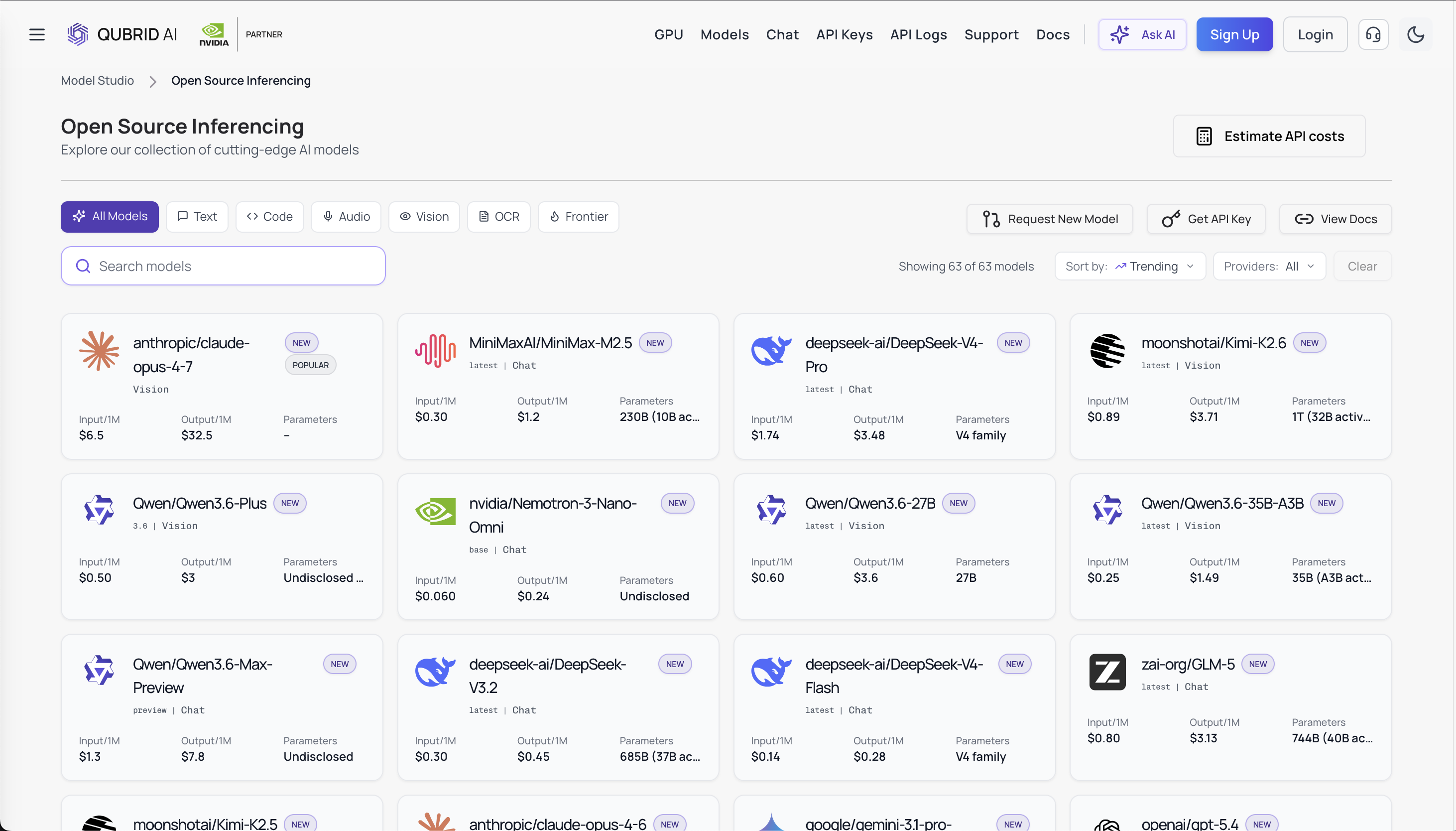
👉 Explore all the models here: https://platform.qubrid.com/models
Instead of committing to one tradeoff, you can optimize dynamically. That is a much more realistic way to build with AI.
What are Qwen Image 2.0 and Qwen Image 2.0 Pro?
At a high level, both models are designed for text-to-image generation. You provide a prompt, and the model generates an image based on that instruction.
Both are capable and modern, but they are tuned with different goals in mind.
Qwen Image 2.0 is better suited for:
Faster generation
Lower latency workflows
Rapid experimentation
Interactive product experiences
Qwen Image 2.0 Pro is better suited for:
Higher fidelity outputs
Better detail and structure
Stronger prompt adherence
More polished production assets
So while the names are similar, the practical use cases can be very different.
The simplest way to think about it is this:
Qwen Image 2.0 = speed-first
Qwen Image 2.0 Pro = quality-first
That sounds obvious, but the implications become much clearer once you look at how these models behave in actual workflows.
Speed: where Qwen Image 2.0 has the advantage
For many applications, speed is not just a nice bonus. It is the experience.
If you are building a user-facing AI product, slow generations can make even a powerful model feel frustrating. In interactive environments, responsiveness matters a lot more than people expect. This is where Qwen Image 2.0 has a clear edge.
Because it is optimized for faster turnaround, it works especially well in situations where users are actively exploring prompts and expecting quick feedback.
That includes use cases like:
Creative prompt playgrounds
Image generation chat tools
AI content assistants
Internal prototyping tools
Concept ideation workflows
When users are experimenting, they do not usually need the perfect image on the first try. What they need is momentum. They want to test ideas, change phrasing, adjust scenes, and move quickly.
A faster model helps maintain that flow. On Qubrid AI, that means Qwen Image 2.0 is often the more practical choice for the earlier stages of creative work.
Quality: where Qwen Image 2.0 Pro starts to justify itself
Speed matters, but there is a point where image quality becomes the priority.
If you are generating visuals that will actually be used externally—whether in marketing, content, product demos, or polished creative work—then the quality difference starts to matter more. This is where Qwen Image 2.0 Pro becomes more compelling.
Compared to the standard version, Pro is generally better at delivering:
Sharper visual details
More coherent composition
Cleaner structure in complex scenes
Better rendering consistency
Stronger handling of nuanced prompts
This becomes especially noticeable when prompts are more descriptive or when the image needs to feel intentional rather than merely acceptable.
For example, if you are generating:
campaign visuals
brand-style content
polished social media creatives
more detailed scene compositions
presentation-ready imagery
then Pro is usually the safer option.
It may take a bit longer, but the output is often closer to something you would actually want to use.
And that difference matters more than raw generation speed when the image is customer-facing.
Prompt adherence: a practical difference teams actually notice
One of the most underrated differences between image models is not just how good they look, but how well they follow instructions.
A lot of models can create something visually appealing. Fewer can consistently create what you actually asked for.
This is where Qwen Image 2.0 Pro tends to pull ahead.
For simple prompts, both models will often perform well enough. But as soon as prompts become more structured, layered, or specific, the gap becomes easier to notice.
In more complex prompts, Pro is generally better at:
Preserving multiple requested elements
Following composition-related instructions
Maintaining scene consistency
Respecting descriptive nuance
Producing outputs closer to intent
Meanwhile, the standard model may occasionally:
simplify a scene
omit smaller requested details
flatten more nuanced prompt structure
That does not make Qwen Image 2.0 weak. It just means it is better suited for faster, broader generation rather than precision-heavy output.
This is important because many real teams do not just want “an image.” They want a very particular image.
And when prompt accuracy matters, model choice starts to matter a lot.
Cost is not just about price per image
A lot of people compare models by asking which one is cheaper per request. That is useful, but it is not the full picture.
The more useful question is:
Which model gets you to a usable output more efficiently?
Because in practice, a “cheaper” model can become expensive if it takes many retries to get the result you want.
This is where model economics become more interesting.
Qwen Image 2.0 often makes more sense when:
You are generating at high volume
You need lots of variations
You are in exploration mode
Output perfection is not critical
👉 Try Qwen Image 2.0 over here: https://platform.qubrid.com/model/qwen-image-2.0
Qwen Image 2.0 Pro often makes more sense when:
You need fewer but better images
The output is customer-facing
Prompt accuracy matters
You want less rework later
So the cost conversation should not just be:
“Which model is cheaper?”
It should also be:
“Which model is more efficient for this stage of work?”
That is a much better framework for deciding what to run on Qubrid AI.
👉 Try Qwen Image 2.0 Pro over here: https://platform.qubrid.com/model/qwen-image-2.0-pro
The best workflow on Qubrid AI is often using both
This is probably the most practical takeaway from the entire comparison.
For many teams, the smartest setup is not choosing one model over the other. It is using both models at different stages of the same workflow.
A very effective pattern looks like this:
A practical hybrid workflow
Use Qwen Image 2.0 for ideation and early prompt testing
Iterate quickly until you find a direction that works
Refine the prompt with more detail and specificity
Switch to Qwen Image 2.0 Pro for final image generation
This approach works well because it aligns each model with what it does best.
Why this workflow works
You save time during experimentation
You reduce wasted compute on high-quality generations too early
You get better final outputs once direction is clear
You avoid forcing one model to do everything
This is also where Qubrid AI becomes especially useful from a developer and product perspective.
You are not redesigning your stack every time you switch models. You are simply choosing the right tool for the right stage. That is a much healthier way to scale image generation into real applications.
Best use cases for each model
If you want a simpler way to decide, here is the cleanest breakdown.
Use Qwen Image 2.0 on Qubrid AI if you need:
fast image generation
live prompt experimentation
lower-cost iteration
interactive creative tools
early-stage visual ideation
Use Qwen Image 2.0 Pro on Qubrid AI if you need:
higher quality outputs
more detailed generations
better prompt fidelity
stronger scene composition
final production-ready visuals
And if your workflow includes both experimentation and output quality, then the answer is simple:
Final thoughts
The most useful way to compare Qwen Image 2.0 and Qwen Image 2.0 Pro is not by trying to declare a winner. The better question is: what are you optimizing for?
If you care most about speed, responsiveness, and rapid iteration, Qwen Image 2.0 is the better fit. If you care most about quality, detail, and final output consistency, Qwen Image 2.0 Pro is the stronger option. But the real advantage comes when you stop treating model choice like a permanent decision.
👉 Try Qwen Image 2.0 over here: https://platform.qubrid.com/model/qwen-image-2.0
👉 Try Qwen Image 2.0 Pro over here: https://platform.qubrid.com/model/qwen-image-2.0-pro
That is what makes Qubrid AI such a practical platform for this kind of work. It gives teams the ability to move between models based on actual product needs—not just static preferences.
And in AI, that flexibility is often what separates something that demos well from something that actually works in production. If you are building serious image generation workflows, that is the difference that matters.