Lessons from Running Open Model APIs at Scale
Have you ever wondered what really happens behind the scenes when you call an AI API and get a response in seconds?

Running open model APIs at scale sounds simple on the surface. You spin up GPUs, host a model, and expose an endpoint. But once real developers start building on top of your system, things change fast. In this article we will break down practical lessons from operating open model APIs in production, covering performance, costs, developer experience, and data privacy, with insights shaped by platforms like Qubrid AI that focus on open models and GPU infrastructure.
Start simple but design for growth
In the early days, traffic is unpredictable. You might go from zero to thousands of requests overnight because one integration takes off.
The best approach is to keep your first version simple but build with scale in mind. Use stateless API layers, a queue based request system, and a scheduler that can route traffic across available GPU instances.
This gives you flexibility to scale horizontally without rewriting your core system later.
Latency decides whether developers stay
Developers are very sensitive to latency. Even a few extra seconds can break a user experience.
Latency in open model APIs usually comes from four main areas:
model loading time
token generation speed
queue delays
network overhead
You solve this by keeping warm pools of models in memory, using faster inference runtimes, and placing compute closer to your users. Small optimizations add up quickly at scale.
GPU utilization controls your margins
GPUs are your biggest cost. If they are idle you lose money. If they are overloaded users face delays.
The real challenge is finding the balance. Techniques like dynamic batching, request prioritization, and routing smaller jobs to lower cost GPUs can dramatically improve utilization.
Quantization and model optimization also help you fit more workloads on the same hardware without hurting quality too much.
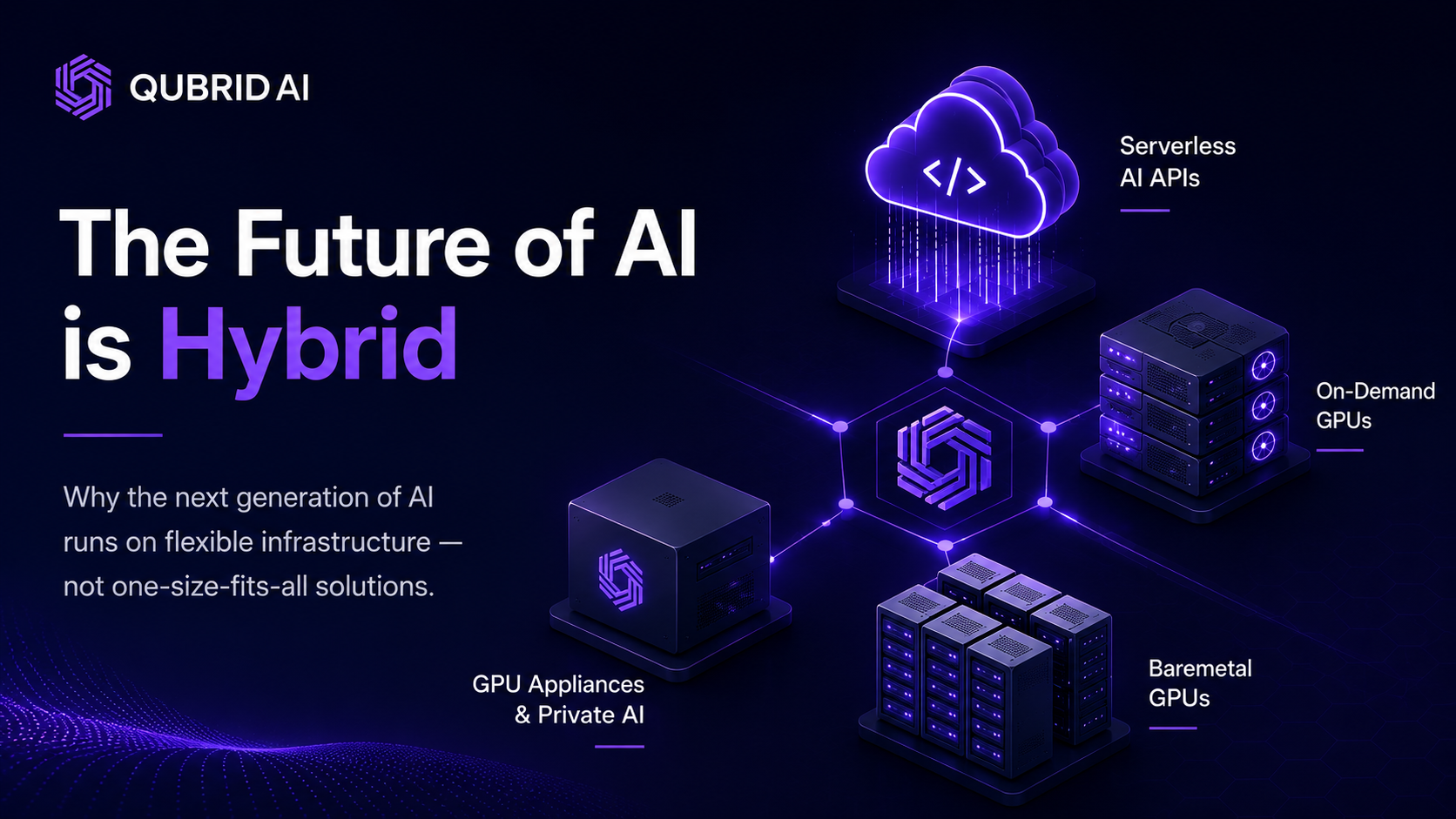
If you want to spin up GPUs quickly without managing the underlying infrastructure yourself, platforms like Qubrid AI make it easier to provision and run open models on demand so you can focus on building instead of managing hardware.
Different models serve different needs
Not every user needs the biggest model. Smaller models are faster and cheaper for simple tasks like classification or short completions. Larger models handle reasoning, long context, and complex workflows better.
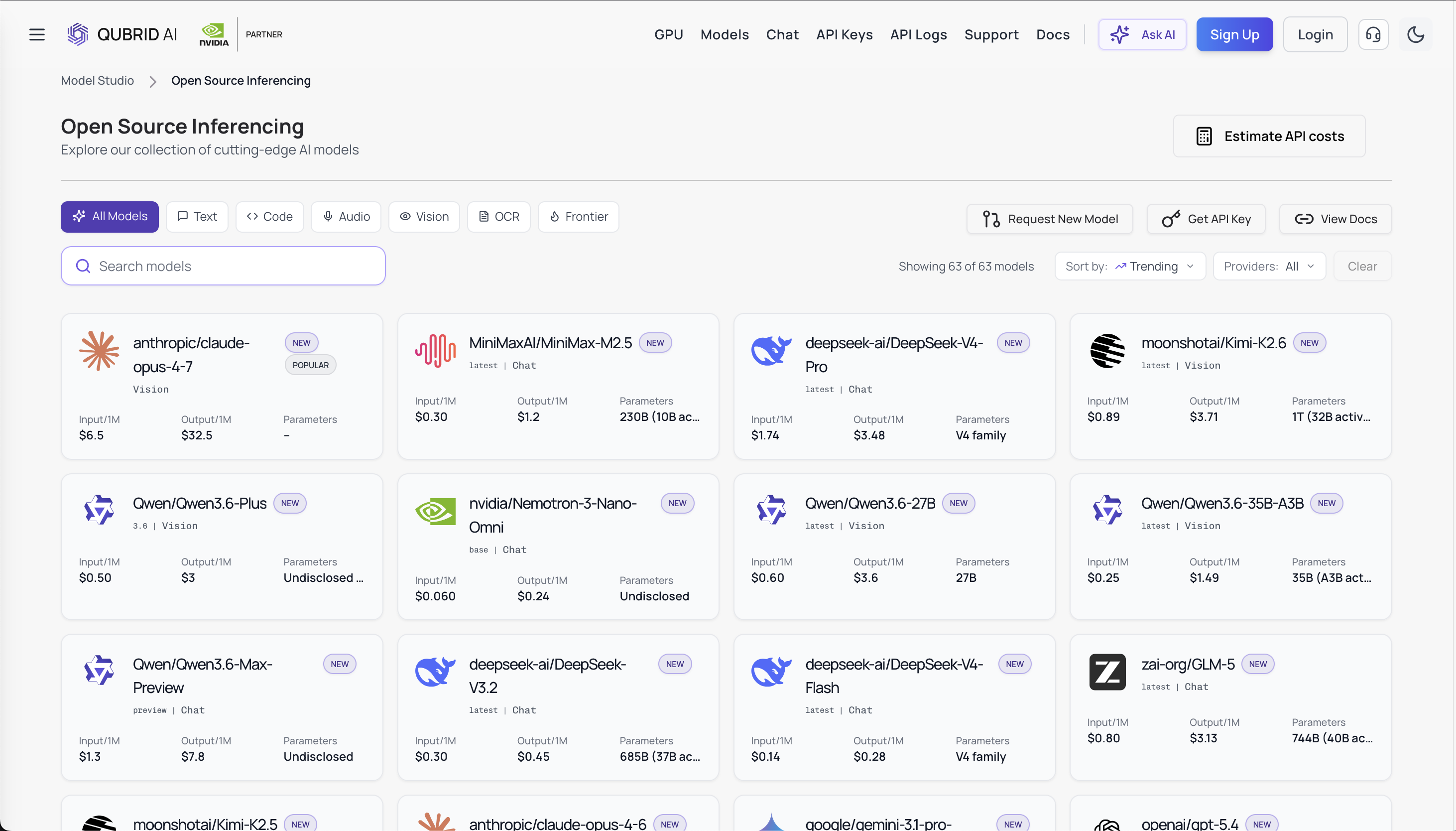
A strong open model API platform usually exposes multiple models and lets developers choose or automatically routes requests to the right model based on use case. This flexibility is one of the biggest advantages of working with open models.
Observability is your safety net
When something breaks in production it rarely fails cleanly. You might see slow tokens, partial outputs, or sudden spikes in errors. Without proper monitoring you cannot debug quickly.
At scale you need request level logs, latency metrics, token throughput tracking, and alerts for GPU memory and queue depth. Tracing across your API and inference layers helps you identify bottlenecks in minutes instead of hours.
Developer experience drives adoption
Infrastructure alone does not win. Developers stay when your API is easy to use.
Clear documentation, SDKs in popular languages, consistent response formats, and good error messages matter a lot. Compatibility with widely used API standards makes switching much easier.
The goal is simple. A developer should be able to send their first request in minutes without friction.
Pricing clarity builds trust
Open model APIs attract developers because they are flexible and often cost effective. But unclear pricing quickly breaks that trust.
You need transparent token pricing, simple dashboards, and usage tracking so users know what they are spending. Alerts and limits help them avoid unexpected bills.
When developers trust your pricing, they are more willing to build serious products on top of your platform.
Design for failure not perfection
At scale, failures are guaranteed. GPUs can crash, models can run out of memory, and networks can fail.
Instead of trying to eliminate all failures, design your system to handle them gracefully. Add retry logic, fallback models, and clear error responses.
For example, if a large model fails due to memory limits, you can retry with a smaller model and inform the user. This keeps applications running instead of breaking completely.
Data privacy is a core responsibility
When developers send prompts to your API, they may include sensitive data like user conversations, internal documents, or proprietary code. Protecting that data is critical.
Do not store user data unless necessary. Process requests in memory and discard them after completion whenever possible. If logging is needed for debugging or analytics, make it optional and transparent.
Encrypt data in transit and at rest, enforce strong access controls, and ensure isolation between users in multi tenant systems. Clearly state that user data is not used for model training unless they explicitly opt in.
These practices are not just about compliance. They are about building trust with your users.
Community is a growth engine
Open model ecosystems grow because of developers building together. When you support your community through tutorials, example projects, and open discussions, you create a feedback loop. Developers share use cases, you improve the platform, and more people join.
Many of the fastest growing AI infrastructure platforms invested early in community, not just technology.
Final thoughts
Running open model APIs at scale is a combination of strong engineering, efficient GPU usage, thoughtful privacy practices, and a deep focus on developer experience.
If you are building or exploring this space, keep things simple for users and efficient behind the scenes. That balance is what turns a basic API into a reliable platform developers trust.
If you want to experiment with open model APIs or spin up GPUs for your own workloads, try Qubrid AI and start building with open models and scalable infrastructure that is ready to go from day one.