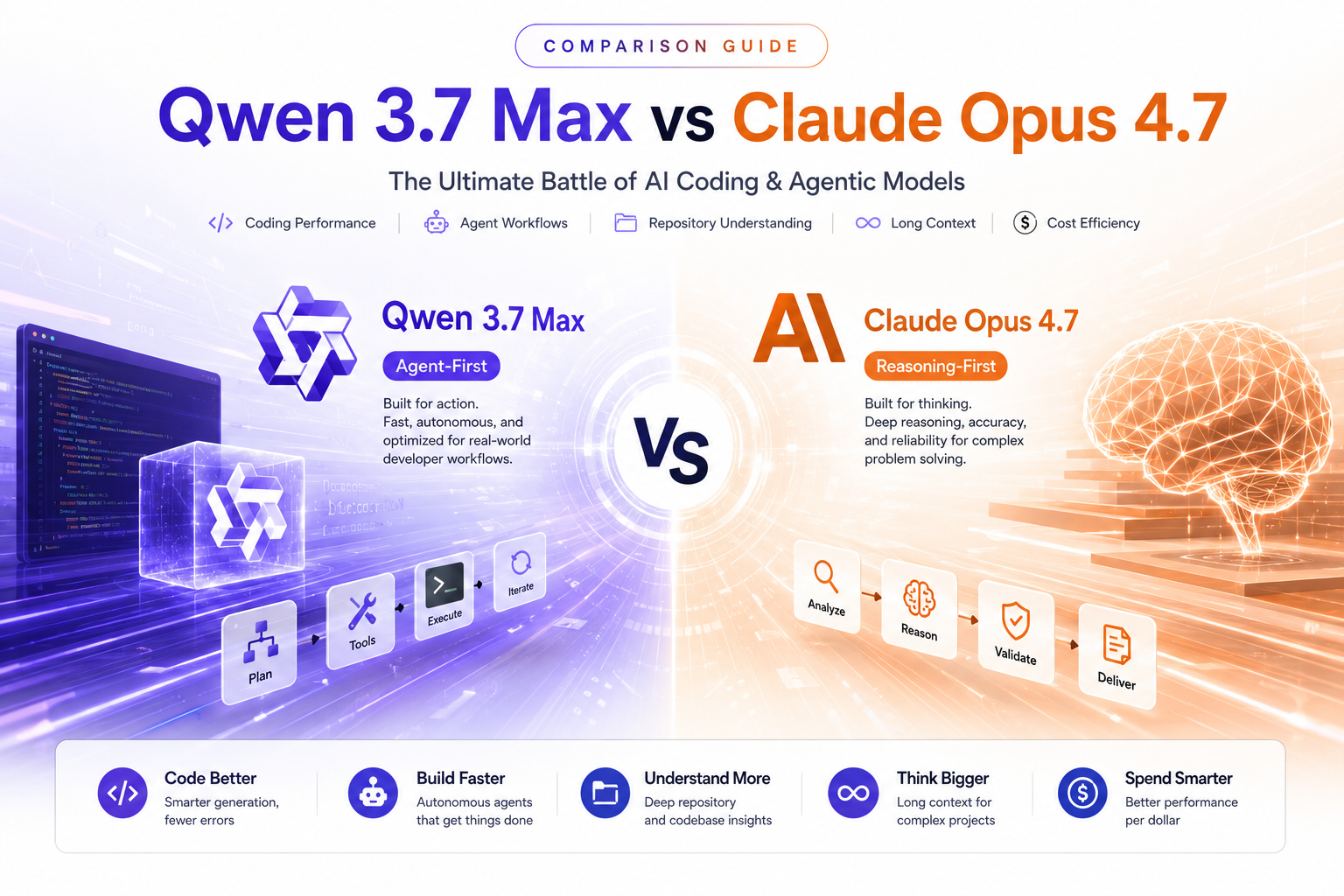
Comparing Qwen 3.7 Max and Claude Opus 4.7 across software engineering, AI agents, long-context reasoning, benchmark performance, and API costs.
Shubham Tribedi
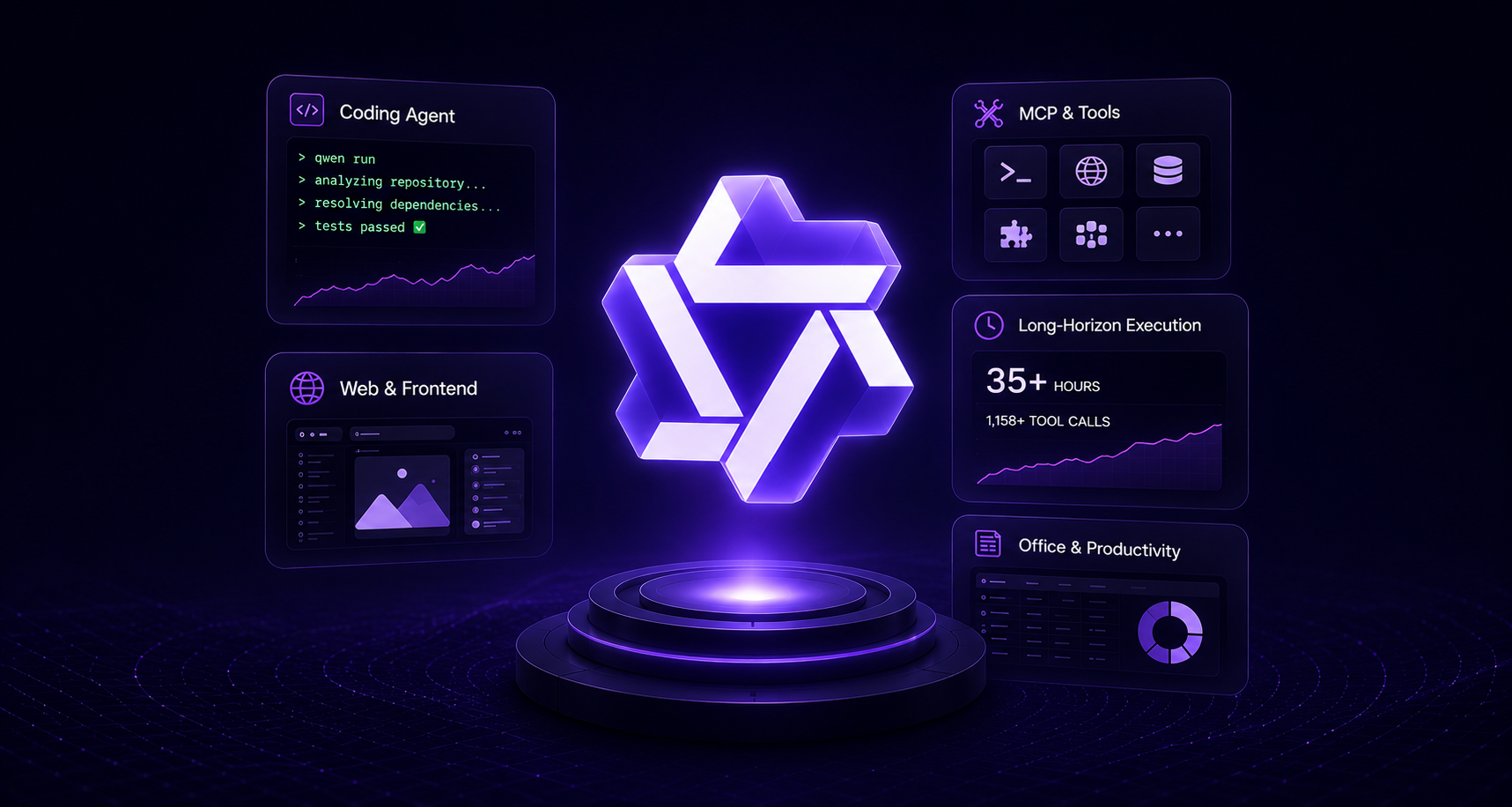
One of the strongest frontier models for coding agents, MCP workflows, and long-horizon AI execution is now available on Qubrid AI.
Shubham Tribedi
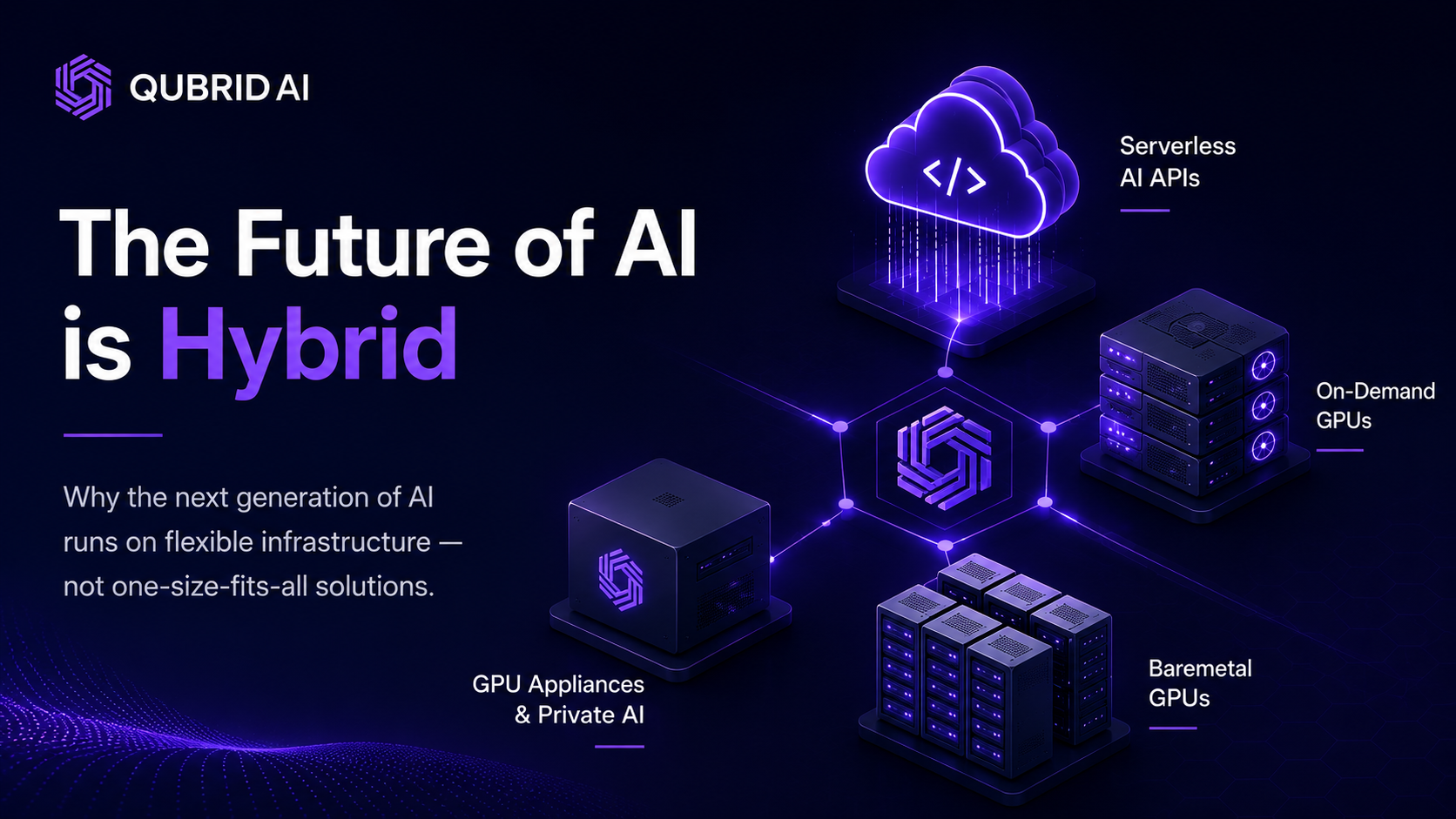
As open-weight models, inference optimization, and GPU infrastructure evolve rapidly, organizations are beginning to rethink where AI workloads should actually run. This deep technical analysis explores the real economics, performance tradeoffs, latency considerations, and architectural shifts driving the rise of hybrid AI systems across local, cloud, and on-prem deployments.
Shubham Tribedi
From low-latency voice assistants and streaming multimodal systems to the future of conversational infrastructure, here’s why GPT-Realtime-2 is becoming one of the most discussed topics among developers, startups, and the broader AI community
Shubham Tribedi
If you've been following the open-source LLM space over the past few months, you already know that Moonshot AI has been one of the more interesting players to watch. Their latest release, Kimi K2.6, is generating real attention among developers, and not just because of the benchmark numbers.
Shubham Tribedi
DeepSeek V4 Pro API Explained in Depth: Intelligence Scores, Token Usage, Latency, Pricing, and How to Optimize It for Production
Shubham Tribedi
NVIDIA dropped two very different open models in 2026. One is a heavyweight reasoning engine designed for large-scale multi-agent pipelines and complex agentic workflows. The other is a lean, omni-modal perception model that sees, hears, reads, and reasons all on a single GPU. Same NVIDIA Nemotron DNA. Radically different use cases.

QubridAI
Kimi K2.6 is Moonshot AI's latest open-source model built for long-horizon coding, multimodal input, and agent swarm workflows. And the easiest way to access it via API right now is through Qubrid AI, which gives you instant serverless access without touching any GPU infrastructure.
QubridAI
You're building something that matters. Maybe it's an autonomous coding agent, a document-heavy RAG pipeline, or a multi-step workflow that needs to think before it acts. You've heard the buzz around Alibaba's Qwen3.6 family two models, same lineage, very different personalities. Here's the uncomfortable truth: picking the wrong one won't just cost you benchmark points. It'll cost you latency, money, and in some cases, the quality ceiling your product actually needs.
QubridAI
Most open-source AI releases ask you to make a trade-off: raw power or practical speed. DeepSeek's V4 series refuses that bargain. With two models one built for scale, one built for velocity and a shared architecture that supports a full **one million token context window**, the DeepSeek-V4 series is one of the most thoughtfully designed open-weight releases to date. Whether you're building latency-sensitive applications or tackling complex agentic workflows, there's a V4 model designed for exactly what you need.
QubridAI
Most AI pipelines are a mess of duct tape. You have one model handling vision, another transcribing audio, and yet another stitching it all together, each hop adding latency, complexity, and cost. If you've built anything resembling an agentic system lately, you've felt this pain firsthand.
QubridAI
If you’ve been waiting for a model that doesn’t make you choose between speed and intelligence, DeepSeek V4 Flash might be exactly what you’ve been looking for. Built on the same architectural lineage as DeepSeek V3 and the newly released DeepSeek V4 Pro, V4 Flash is optimized for developers who need rapid, reliable responses without sacrificing reasoning depth. It’s lean, it’s quick, and it’s now available on Qubrid AI.
QubridAI